


Garage Floor Tiles for Mudrooms: Winter Boot Zone Ideas
Garage Floor Tiles for Mudrooms: Winter Boot Zone Ideas
In a lot of homes, the garage door is the real front door. It is where boots come off, wet coats get hung, and the day's salt and grit stops — or fails to stop — before it reaches the hallway carpet. Once the first snow arrives, that traffic turns a hard-wearing garage floor into the hardest-working surface in the house.
Interlocking garage floor tiles happen to be very good at this job. Here is how to set the zone up properly.
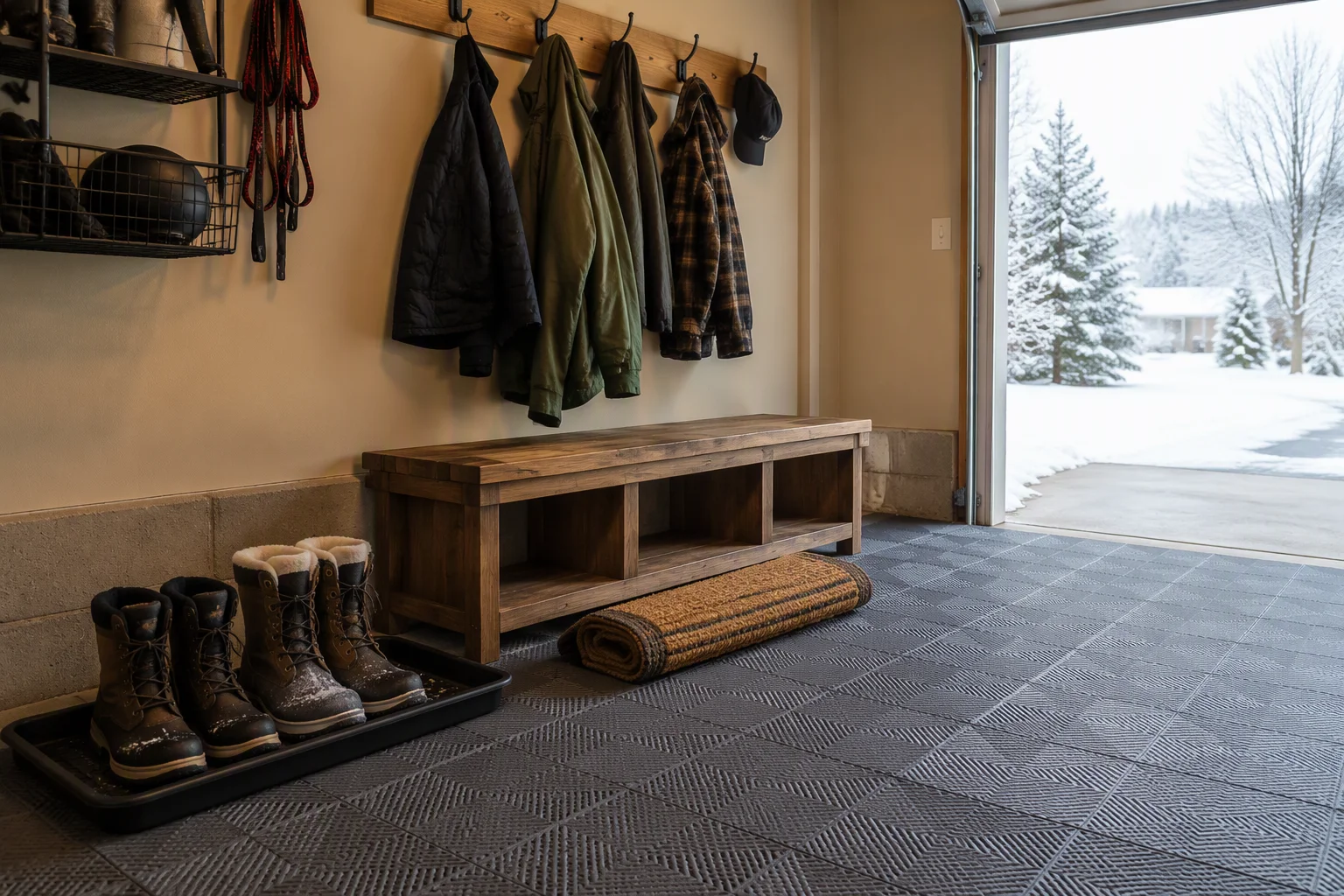
Why the Garage Becomes the Winter Entry
Three things push household traffic through the garage between November and March:
- Weather. Nobody wants to carry groceries and a toddler through a wet front path when there is a dry, covered, well-lit route through the garage.
- Mess containment. The garage is the one room where tracked-in slush, salt and mud are tolerable. Better it lands here than on hardwood.
- Space. A garage has the width for a bench, hooks, shelving and a boot tray without stealing floor area from living space.
That makes the floor the first line of defence, and it has to work in conditions that would ruin most surfaces.
What an Entry Zone Floor Has to Handle
The floor beside a garage door in winter takes more abuse than any other part of the slab.
- Road salt and brine — the single most damaging thing a car brings home, and the reason we wrote a separate guide on winter salt, snow and ice protection.
- Grit and gravel — abrasive particles ground underfoot in the exact same spot, day after day.
- Standing slush melt — water pooling near the door and refreezing overnight.
- Wet boots and pet paws — repeated wet-dry cycles rather than one-off spills.
- Occasional oil and de-icer drips — a second car, a snowblower, a fuel can.
Bare sealed concrete handles some of this and then starts to show its age: efflorescence, spalling at the door edge, and a permanently stained traffic lane. A coating can work well but dislikes abrasion and has no tolerance for a slab that stays damp. Tiles sidestep both problems.
Why Interlocking Tiles Suit a Boot Zone
- They are unaffected by moisture. A wet, salty slab under the floor is not a problem — tiles sit on top and stay dimensionally stable.
- Salt will not damage the surface. Polypropylene shrugs off de-icer and brine; there is no film to break down or flake.
- They are slip-resistant when wet. The raised texture pattern grips a wet boot far better than a glossy coating.
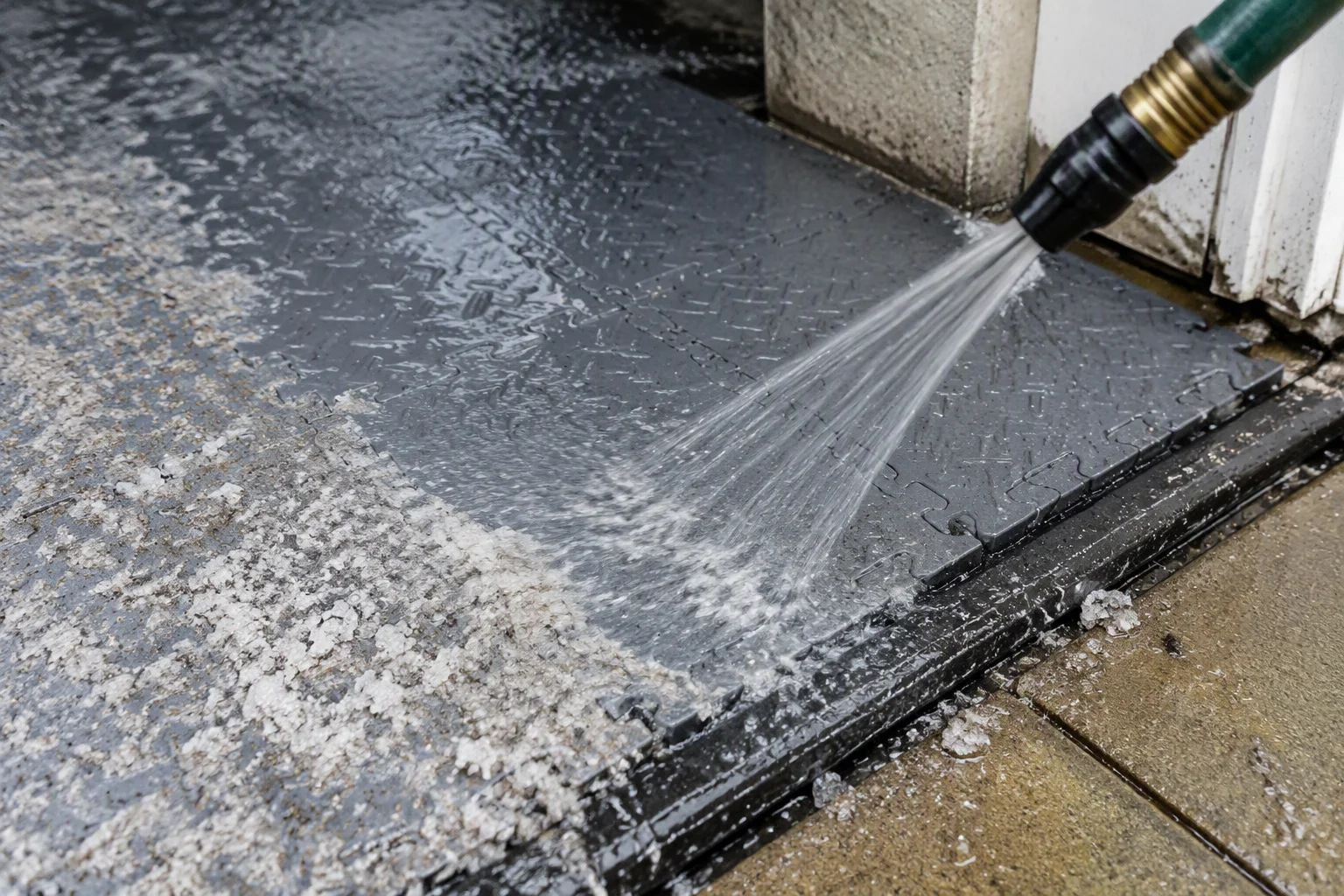
- Cleanup is a rinse. Salt residue and grit rinse off with a hose and dry quickly along the seams.
- Damage is replaceable. If the door zone does eventually scar, you swap a handful of panels instead of recoating a floor.
- They are warmer underfoot than bare concrete — noticeable when you are standing in socks while unlacing boots.
Planning the Zone
Treat the first two metres inside the door as a defined area with its own job, distinct from the parking bays.
| Element | Purpose | Notes |
|---|---|---|
| Tile surface | Wet, salted traffic | Choose a textured grade; darker mid-tones hide grime |
| Boot tray or mat well | Captures melt before it spreads | Deep lip tray; sits directly on the tiles |
| Bench | Seated boot removal | Wall-mounted keeps the floor clear |
| Hooks and rail | Wet coats, leads, gloves | Above the bench, out of the traffic line |
| Drain or squeegee zone | Directs melt water | Ideally sloped toward the door or a drain |
| Edge trim | Finishes the tile edge | Also gives a clean stop where the zone meets a step |
If the rest of the garage is used for parking, a different tile colour in the entry strip is the simplest way to signal where shoes come off. Sizing and layout choices are covered in our tile size guide.
Building the Boot and Coat Station
- Put the tray where the foot lands. Watch where people actually stop when they step in — it is rarely where you assume — and position the tray under that spot.
- Keep the walkway a straight line. Bench and hooks to one side, clear path to the house door on the other.
- Raise storage off the floor. Wall-mounted shelving keeps wet boots and bags off the tile and makes mopping the zone a ten-second job.
- Add a seating height that works in boots. A bench that is comfortable in trainers can be awkward in thick winter footwear — test before fixing it.
- Leave the tile field uninterrupted under furniture. Do not cut tiles around a freestanding bench; just lift it when you need to clean.
It is worth treating this as one part of a wider plan rather than a standalone project — our garage organization guide explains how flooring and storage decisions reinforce each other.
Colour and Layout That Hide Winter Grime
Winter dirt is grey, white and gritty — which makes very dark floors look dusty and very light floors look permanently dirty.
- Mid-tones win. Greys, graphite blends and speckled patterns absorb the visual noise of salt and grit better than either extreme.
- Speckle beats flat. A mottled pattern breaks up footprints and dried salt lines between cleans.
- Use contrast deliberately. A darker entry strip against a lighter field reads as intentional design rather than a dirty patch — see our colour selection guide.
- Lay long seams toward the house door. They guide the eye and make the zone feel purposeful.
The Cleaning Routine for a Salt-Heavy Entry
- Daily: shake the boot tray out onto the driveway, sweep loose grit toward the door.
- Weekly: rinse the entry strip with plain water; salt does not need detergent, it needs dilution and removal.
- Monthly: mop the whole zone with a neutral cleaner to lift the fine grey film that rinsing leaves behind.
- After a heavy storm: rinse again once the salt is fully dissolved — dried brine leaves a white haze that reappears every time the floor gets wet.
- Stubborn marks: oil, de-icer stains and rust transfer need targeted treatment — see our stain removal guide.
One caution for cold snaps: if you lay the entry zone in freezing weather, acclimatise the tiles indoors first so the connectors seat properly — the process is covered in our guide to installing tiles in cold weather.
FAQ
Will road salt stain garage floor tiles?
No. Polypropylene is not affected by de-icer or brine, and dried salt residue rinses away with water. Unlike concrete or an unsealed coating, there is no porous surface for the salt to etch into.
Does melt water get trapped under the tiles?
Water drains through the seams to the slab and evaporates along the open channels underneath, which is why a tiled floor dries faster than a bare slab. For heavy melt, a drain or a slope toward the door keeps volumes manageable.
Are garage floor tiles too slippery when wet?
The reverse — a textured tile has far more grip under a wet boot than a smooth sealed or coated floor. If the specific area stays permanently wet, look for a tile with a coarser surface pattern.
Can I tile just the entry zone?
Yes, and it is a common approach. Interlocking tiles form a free-standing mat-like area, so you can cover only the boot zone and expand later. Finish the open edge with trim so it reads as deliberate.
The Bottom Line
If your garage is really your winter front door, treat the entry as a designed zone rather than leftover floor. A textured interlocking tile surface, a deep boot tray where feet actually land, wall-mounted storage, and a plain-water rinse routine will keep salt and grit off the house floor all season — and look intentional doing it.
Planning a garage entry upgrade before the snow arrives? Tell us your door width and traffic pattern and we will suggest a tile grade and coverage: browse garage floor tiles.


