


Open-Rib vs Solid Garage Floor Tiles: Which Is Better?
Open-Rib vs Solid Garage Floor Tiles: Which Is Better?
When upgrading a garage floor with modular interlocking panels, the single most consequential decision is not the colour or the border layout. It is whether to choose an open-rib vented tile or a solid-top panel. Both styles transform a stained concrete slab into a showroom-quality workspace, but they behave completely differently once water, road grime, rolling toolboxes, and daily traffic enter the garage.
Homeowners often get stuck comparing brand names or warranty years without realising that open-rib and solid tiles solve two fundamentally different problems. This guide breaks down how both surface designs perform across drainage, maintenance, comfort, rolling resistance, and climate, helping you make the right investment for your space.
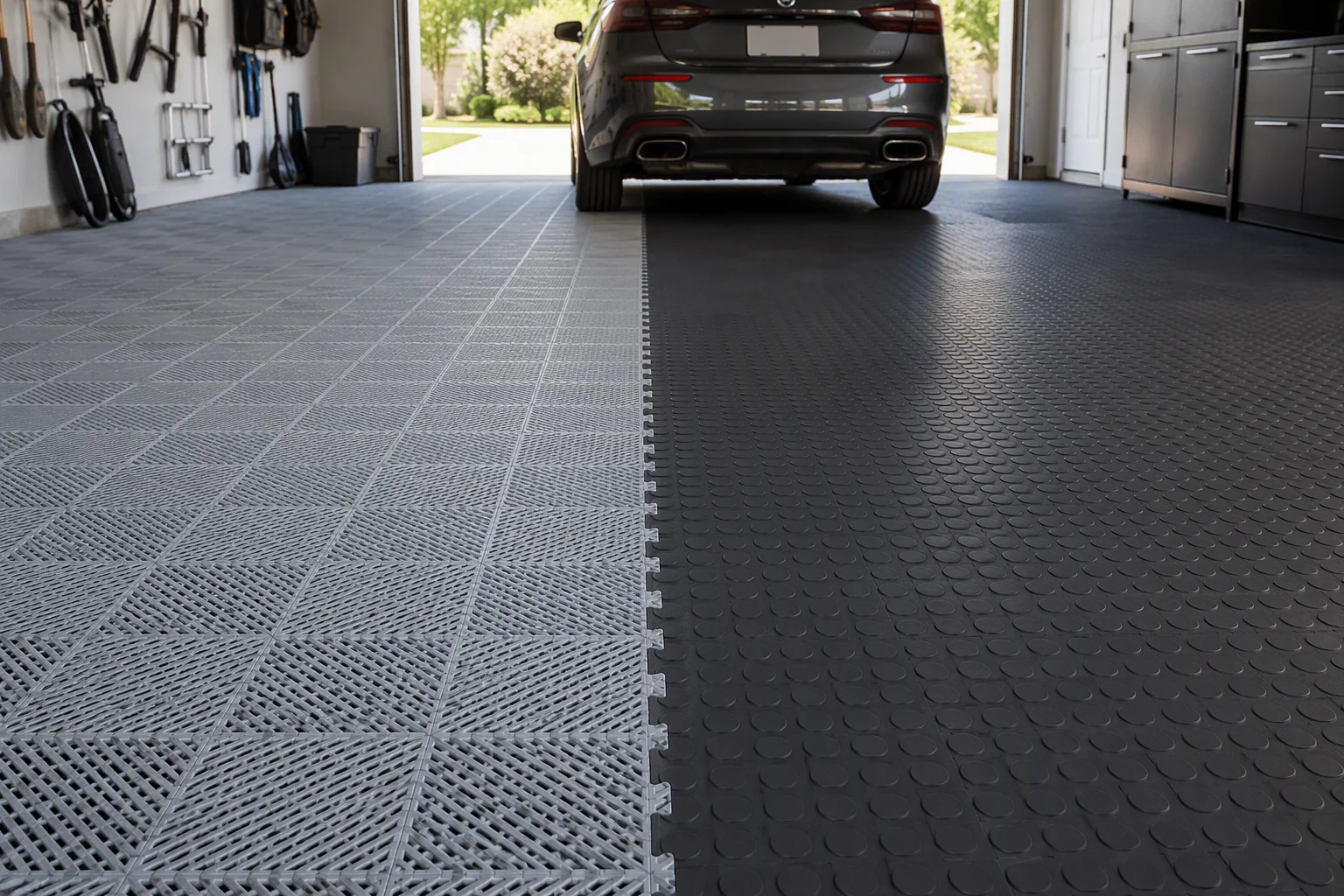
What Are Open-Rib Garage Floor Tiles?
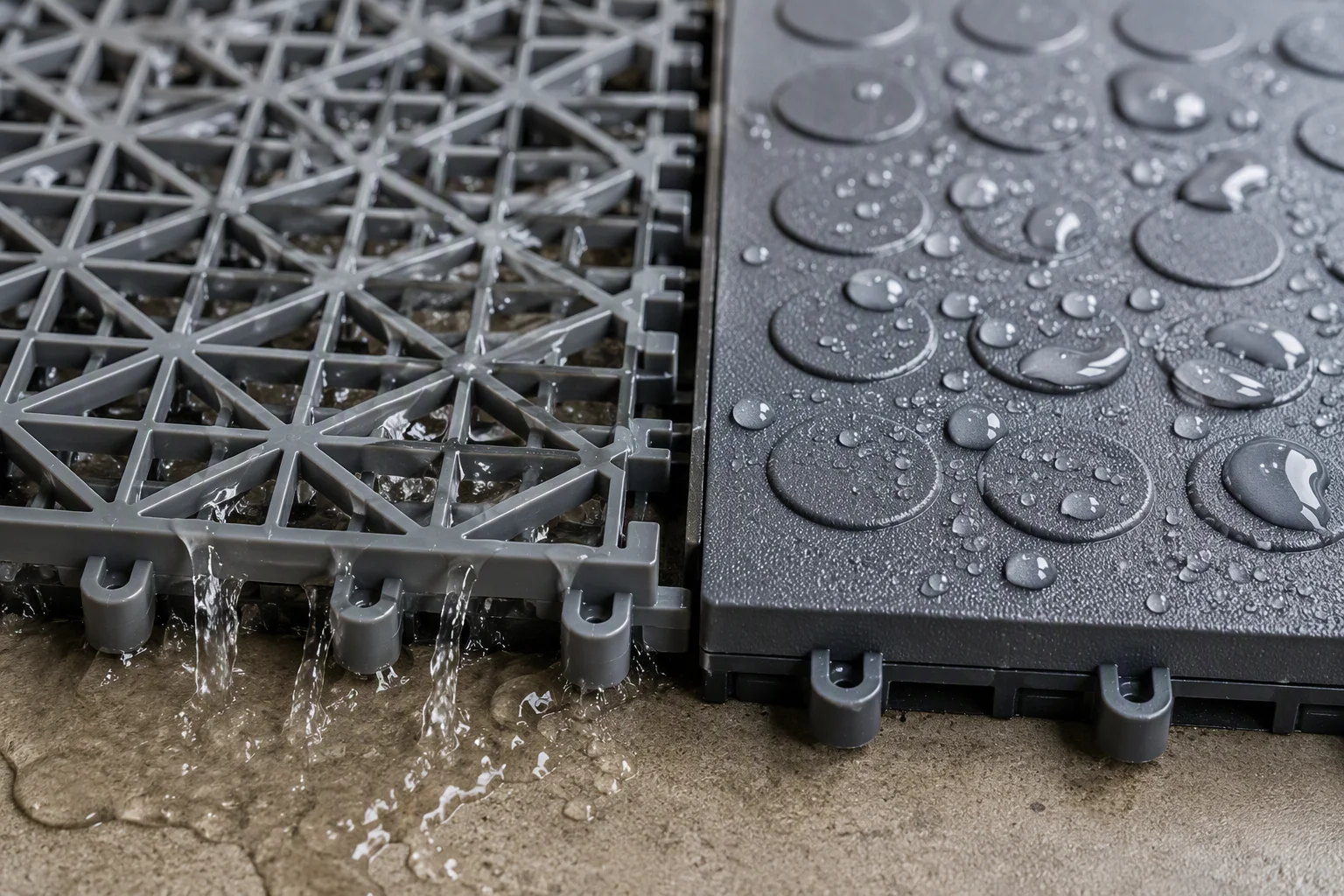
Open-rib tiles (also known as free-flow, perforated, or self-draining tiles) feature a moulded grid structure with open vertical channels. Rather than creating a continuous solid deck, these tiles elevate walking and parking surfaces roughly 18 to 20 mm above the concrete subfloor.
Rainwater, melting snow, washing overspray, and fine debris immediately fall through the surface mesh into the sub-channel grid below. As a result, the top walking surface remains dry, clean, and slip-resistant even during a heavy storm or an active car-washing session.
Key Advantages of Open-Rib Tiles
- Superior Wet Traction: Water cannot pool on the surface, eliminating hydroplaning hazards and slippery puddles underfoot.
- Self-Draining Surface: Snow melt and mud drop beneath the floor instantly, keeping your shoes and vehicle tyres out of standing slush.
- Airflow and Moisture Evaporation: Continuous air circulation beneath the grid prevents moisture from becoming trapped against the concrete slab, as detailed in our guide on whether garage floor tiles trap moisture.
- Effortless Daily Cleanliness: Surface grit falls through the gaps, keeping the visible floor looking tidy between deep cleanings.
What Are Solid Garage Floor Tiles?
Solid garage floor tiles provide a continuous, seamless-looking barrier across the entire floor. Most models feature an embossed surface pattern—such as diamond plate, coin-top studs, or smooth leatherette textures—to ensure reliable foot traction without open holes.
Because there are no drainage openings, all liquid, dust, fallen screws, and dropped fluids remain on top of the tile. Solid tiles create a sealed protective shield over your concrete, preventing spills from ever touching the original slab.
Key Advantages of Solid-Top Tiles
- Complete Containment of Spills: Oil, coolant, brake fluid, and paint stay on top of the tiles where they can be wiped up immediately.
- Smoother Rolling Action: Creepers, floor jacks, small-caster tool carts, and engine stands glide effortlessly without getting caught in mesh ribs.
- Small Parts Won't Disappear: Dropped nuts, washers, screws, and small drill bits stay visible on the surface instead of falling through a grid.
- Traditional Solid-Floor Aesthetic: Delivers the sleek, uniform finish of a premium tile or epoxy floor without the peeling or flaking risks.
Head-to-Head Comparison: Open-Rib vs Solid Tiles
To choose between these two surface architectures, evaluate how you actually use your garage on a weekly basis:
1. Drainage and Weather Performance
If you live in an area with frequent rain, winter snow, or road salt, open-rib tiles are undeniably superior. Snow melting off wheel wells passes through the grid, allowing the vehicle to dry without creating standing puddles. In contrast, solid tiles will hold standing water until you squeegee or mop it toward the garage door.
2. Cleaning and Ongoing Maintenance
Cleaning methods differ significantly between the two styles:
- Open-Rib Tiles: Routine care involves running a shop vacuum over the grid or rinsing the floor with a garden hose. Dirt washes down the subfloor channels toward the garage apron. Every couple of years, you can unzip a section of tiles to flush out accumulated sediment beneath the floor. Review our guide on safe cleaners for garage floor tiles for chemical compatibility.
- Solid Tiles: Maintenance is identical to an indoor hard floor: sweep with a broom and mop with a neutral detergent. However, dust and tyre tracks show up more readily on solid surfaces and require frequent sweeping.
3. Workshop Activities and Heavy Tools
For DIY mechanics and woodworkers, solid tiles offer practical advantages. Heavy mechanic creepers with tiny wheels roll much smoother across solid surfaces. Dropped hardware stays within reach, and metal shavings from grinding or drilling can be swept away without falling into sub-channels. When working with heavy equipment, high-density 20mm garage floor tiles or heavy-duty 30mm garage floor tiles provide the structural support needed under jack stands.
4. Longevity and Wear Patterns
Both styles are manufactured from premium virgin polypropylene impact copolymer, ensuring decades of structural integrity under heavy vehicle loads. For a comprehensive look at expected lifespan and wear cycles, check out our breakdown on how long garage floor tiles last.
Comparison Summary Table
- Rain / Snow Handling: Open-Rib = Excellent (Instant drainage) | Solid = Moderate (Puddles on top)
- Spill Cleanup (Oil / Paint): Open-Rib = Requires rinsing / subfloor flush | Solid = Easy top wipe-down
- Creeper & Tool Cart Rolling: Open-Rib = Good with large wheels | Solid = Excellent with all wheel sizes
- Small Parts Recovery: Open-Rib = Moderate (Can fall through) | Solid = Excellent (Stays on surface)
- Barefoot / Kneeling Comfort: Open-Rib = Moderate (Textured ribs) | Solid = High (Smooth flat plane)
- Installation Method: Both styles use the identical modular interlocking loop-and-pin system
The Hybrid Approach: Combining Both in One Garage
Because premium modular tile lines share the same interlocking joint profile, you do not have to commit to just one style for the entire room. Many homeowners and professional detailers create a custom hybrid layout:
- Parking Bays (Open-Rib): Install open-rib tiles beneath vehicle parking zones to handle wet tyres, melting snow, and wash water.
- Workshop & Storage Zones (Solid): Lay solid tiles around workbenches, tool cabinets, and storage shelving for effortless sweeping and smooth rolling.
- Finished Perimeters: Finish all exposed doorway edges with matched tile edges and ramps for a seamless transition.
You can experiment with solid, open-rib, and multi-colour checkerboard combinations using our free online 3D garage floor designer to visualise your exact room dimensions before ordering.
Which Tile Should You Choose?
Your ideal choice comes down to your primary garage use case:
- Choose Open-Rib Tiles If: You park daily drivers in all weather conditions, frequently wash cars inside the garage, live in a snowy or high-rainfall climate, or want a low-maintenance floor that always looks clean.
- Choose Solid Tiles If: Your garage serves primarily as a workshop, hobby room, or home gym, you frequently use rolling creepers with small casters, or you want complete containment of chemical spills.
Explore the full selection of modular profiles in our comprehensive garage floor tiles collection, or learn more about polymer properties in our guide to garage floor tile materials explained.


