


Garage Floor Tiles for Classic Car Storage: What to Know
Garage Floor Tiles for Classic Car Storage: What to Know
A car that is driven daily and a car that sits for months at a time ask completely different things of a garage floor. The daily driver wears the surface evenly. The stored car does something harder: it rests its weight on the same four contact patches for weeks, it sits in whatever moisture the slab releases, and it gives dust and condensation a long, quiet window to work.
That is why collectors tend to think about the floor later than they should. By the time a car is parked, covered and left alone, the floor underneath has already made its decision about humidity, dust and how pleasant the space is to work in.
This guide looks at what changes when the thing parked on the tiles is a car you are preserving rather than simply using.
Why a Stored Car Needs a Different Floor
The problem with bare concrete
Uncoated concrete is porous. It wicks groundwater and releases it slowly into the air above, and in a closed garage that vapour has nowhere to go. For a car sitting still for three months, the result is condensation on cold steel — brake rotors, suspension parts, the underside of a chrome bumper — and a thin film of dust settling onto paint nobody is touching.
What a tile floor changes
Interlocking tiles do not seal a slab, but they do put a raised, ventilated layer between the concrete and the car. Air moves underneath, moisture can escape at the open edges and door, and the car rests on a surface that does not shed dust. After a winter of storage, the practical result is a car that comes out cleaner and drier than it went in.
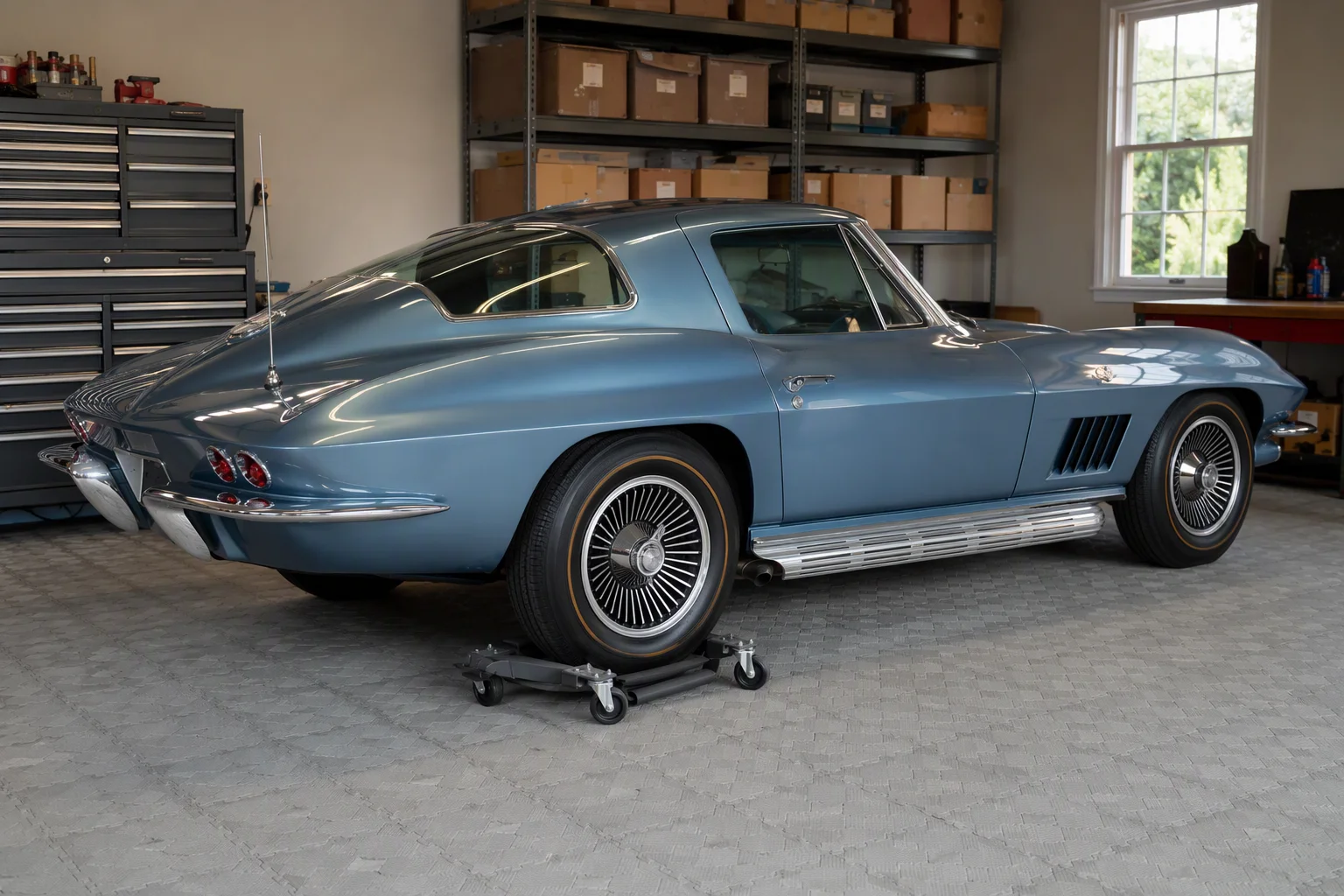
Material choice matters more here than in a working garage. A rigid tile with a closed surface keeps dust from collecting in a texture, and our guide to garage floor tile materials explains how PP, PVC and rubber behave over years of light use rather than daily traffic.
Moisture, Condensation and Long-Term Parking
Long-term storage is a moisture problem before it is a floor problem. Tiles help, but four habits matter as much as the surface itself:
- Leave the drainage path open. Do not seal the tiles tight against every wall. A gap at the door and along one wall lets humid air escape instead of trapping it under the panels.
- Lift the car off its tyres. Flat spots form in the rubber, and the contact patch traps moisture against the tile. Jack stands or wheel dollies spread the load and let air reach the whole underside.
- Dry the floor before storage. Wash and dry the tiles a week before the car goes in, not the day before. Residual water under the panels will sit there all winter.
- Ventilate the space, not just the floor. Crack the garage door an inch on dry days; a garage closed for months will always be damper than the air outside it.
If your slab has a history of sweating, read our FAQ on whether garage floor tiles trap moisture before you install anything.
Working Under a Stored Car
Jacks, stands and load spreading
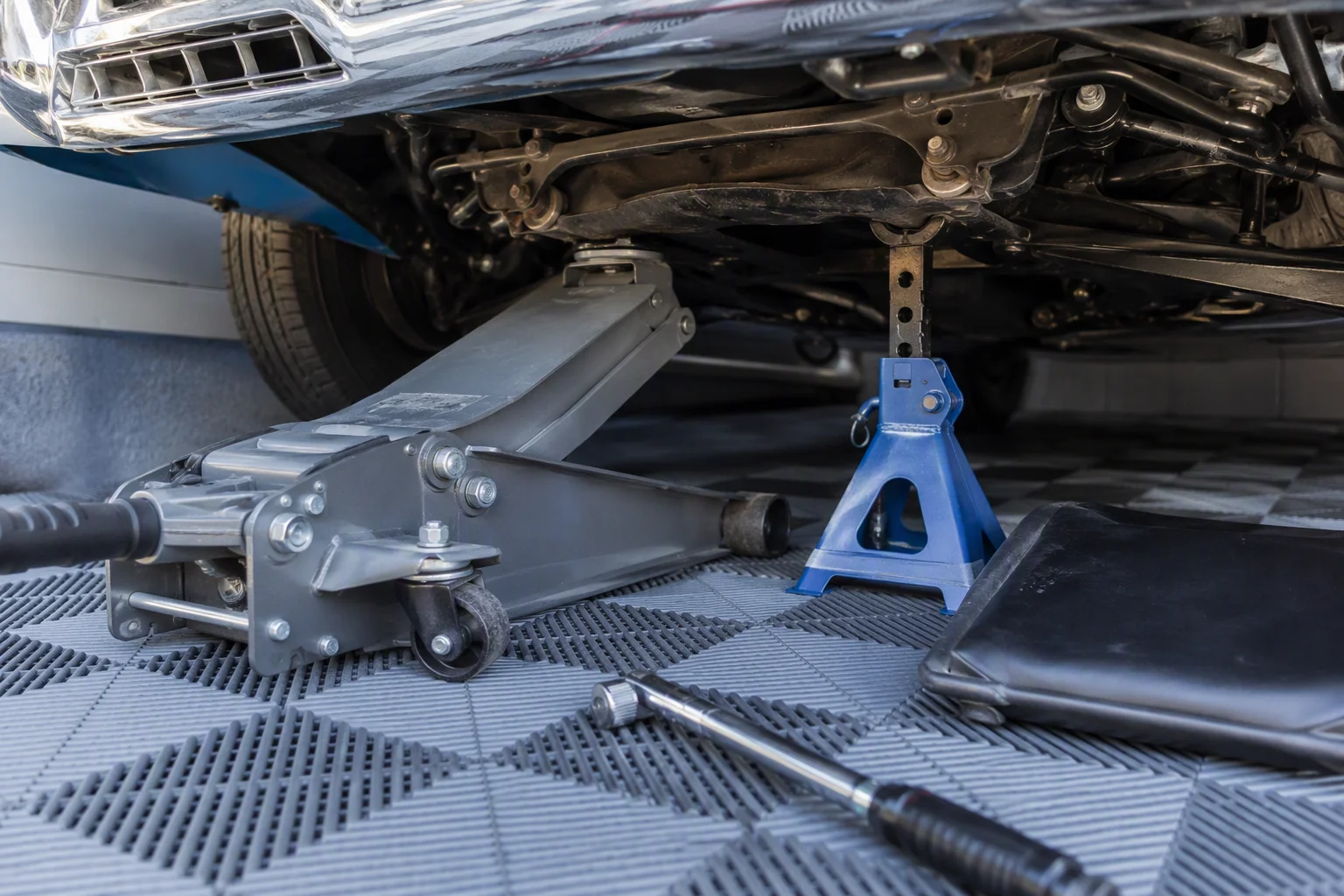
A stored car still gets worked on — the oil changed, the brakes bled, the underside inspected. This is where a rigid tile earns its keep: a trolley jack rolls across the surface instead of digging into it, and a jack stand sits flat rather than settling into a rut. On bare concrete the same job crushes a divot into the slab that holds water for years.
Load is the thing to check before buying. Our guide to garage floor tile weight limits covers what a panel takes under a jack stand's small foot, which is a far harsher test than a tyre.
Comfort on long jobs
Creepers and knee pads work better on a surface that does not grind. A smooth tile is easier on both, and spills wipe up instead of staining — which matters when the fluid in question is brake fluid on a floor you also walk on.
Keeping Dust Off the Paint
Dust is the quiet enemy of a stored car. Concrete sheds fines continuously, and every footstep lifts them into the air where they settle onto horizontal surfaces — a hood, a roof, the top of a wing. Wiping that off dry is how swirl marks get introduced.
A tile floor has no fines to shed, and it can be swept or vacuumed in minutes without raising a cloud. Pair it with a covered car and the difference after six months is measurable: less film, less wiping, less risk every time you do wipe.
Laying Out a Collector's Garage
The floor layout is really a storage layout. Before the panels go down, decide where the car sits, where the tools live and where parts are kept — every one of those decisions changes what the floor has to do.
- Park the car where you work on it. A car pushed against a wall cannot be walked around; leave a metre on the driver's side and at the front.
- Keep a hard strip for jacks. Reserve the area beside the car for a jack and stands instead of stacking boxes there.
- Raise storage off the floor. Shelving on legs lets air move and keeps cardboard off a surface that may see damp.
- Use wheel dollies in tight bays. A dolly turns a five-metre push into a two-metre one, and it keeps the tyres off the tile during storage.
Our piece on garage organization trends has more on wall systems that free up floor space for the car itself.
A Setup Checklist Before the Car Goes In
- Sweep and degrease the slab, then let it dry completely.
- Check for hollow spots and high points — see our FAQ on tiles over uneven concrete.
- Lay the tiles with a gap at the door and along one wall for ventilation.
- Fit edge trim along the walls so the outer run cannot creep.
- Wipe the floor dry and leave the door open for a day.
- Position stands or dollies, then roll the car in.
The Bottom Line
For a car that is driven, a garage floor is mostly about looks and cleaning. For a car that is stored, it is about vapour, dust, and being able to work underneath it without damaging the slab or the car. The interlocking floor tiles that suit a collector's garage are rarely the cheapest ones — they are the ones rigid enough to hold a jack stand and smooth enough to wipe down.
If you are weighing options from scratch, our comparison of garage floor tiles vs concrete covers cost and durability; the storage argument is usually the one that decides it.


