


Garage Floor Tile Materials Explained: PP, PVC and Rubber
Garage Floor Tile Materials Explained: PP, PVC and Rubber
Most garage floor tile listings lead with colour and price. The material is buried in a spec line — and it is the single biggest predictor of how the floor will feel, wear and behave under a car.
Three materials cover almost everything sold for residential garages. Here is what each one actually is, and where it makes sense.
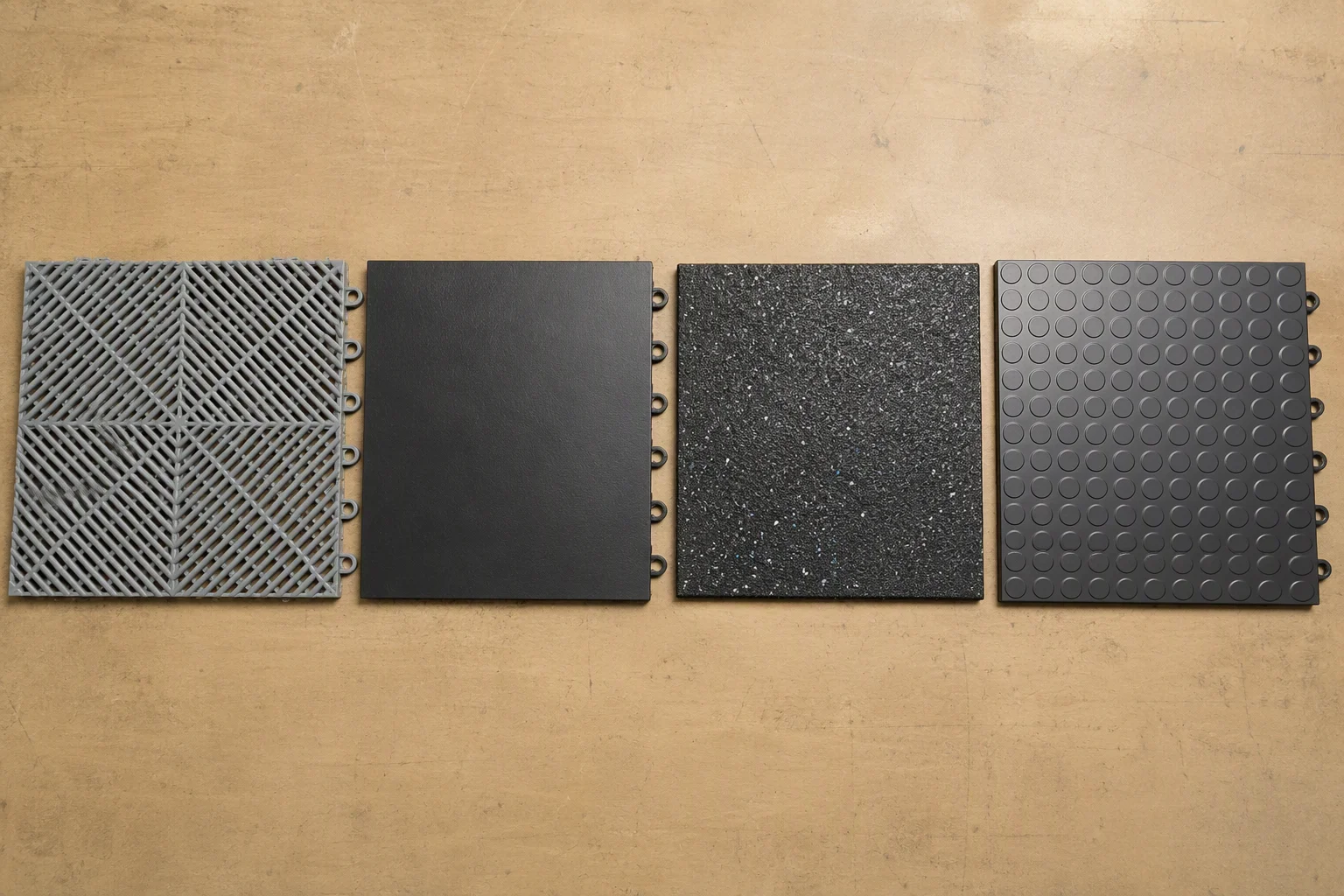
Why the Material Matters More Than the Colour
Material determines the things you cannot change later: how much a tile flexes under a jack stand, whether it stays dimensionally stable through a freezing winter and a hot summer, how it reacts to oil and degreaser, and whether the connectors survive repeated click-and-lift cycles.
Colour is a preference. Material is a specification.
The Three Materials You Will Actually Choose Between
Polypropylene (PP)
The most common material for rigid interlocking garage tiles, and the default for good reason. It is stiff, dimensionally stable, chemically inert against oils, salts and most cleaners, and it does not absorb water. It handles the temperature swings of an unheated garage without warping or becoming brittle, and it takes a tyre load without deforming.
Trade-offs: it is harder underfoot than rubber, and the surface feel is closer to a hard plastic floor than a cushioned one. It also needs a reasonably flat slab, since it will not conform to a bad dip the way a soft tile will.
PVC
Softer and more flexible than PP, with a slightly rubbery surface and better sound dampening. It is comfortable to stand on for long periods, which is why it shows up in workshops and light-duty garage gyms.
Trade-offs: flexibility is not free. A softer tile deforms more under concentrated point loads, so it is less suited to jack stands and heavy static loads, and it can soften further in a hot garage. It is also more vulnerable to aggressive solvents. The full comparison is in our guide to garage floor tiles vs PVC.
Rubber
The best grip, the best sound absorption and the most comfortable surface to stand or kneel on. Perforated rubber tiles drain well and are genuinely good in a wash-down zone.
Trade-offs: rubber is heavy, which makes large areas more expensive to ship and slower to lay; it is more prone to staining and more difficult to clean thoroughly; some formulations take a set or mark under prolonged point loads; and it is usually sold as mats rather than a full interlocking floor system. Our guide to garage floor tiles vs rubber mats covers where each wins.
Material Comparison at a Glance
| Property | Polypropylene (PP) | PVC | Rubber |
|---|---|---|---|
| Rigidity | High | Medium | Low to medium |
| Point-load resistance | Excellent | Fair | Fair |
| Underfoot comfort | Firm | Good | Best |
| Grip when wet | Good (textured) | Good | Excellent |
| Chemical resistance | Excellent | Moderate | Moderate |
| Water absorption | None | None | None (perforated drains) |
| Heat stability | Good | Softens sooner | Good |
| Weight per m² | Light | Light | Heavy |
| Best suited to | Full garage floors, vehicle use | Workshops, light gyms | Wash zones, standing work |
What to Look For on a Spec Sheet
- Base polymer, not just "plastic". A listing that names PP or PVC is telling you something; one that says "high-quality material" is not.
- Thickness. Thicker panels span an imperfect slab more comfortably — our thickness guide sets out the grades.
- Load rating per tile. Check what the figure is measured against, and combine it with the guidance in our load capacity guide.
- Temperature range. It should comfortably cover your worst winter night and your hottest summer day.
- Recycled content. Increasingly stated, and worth asking about if it matters to you.
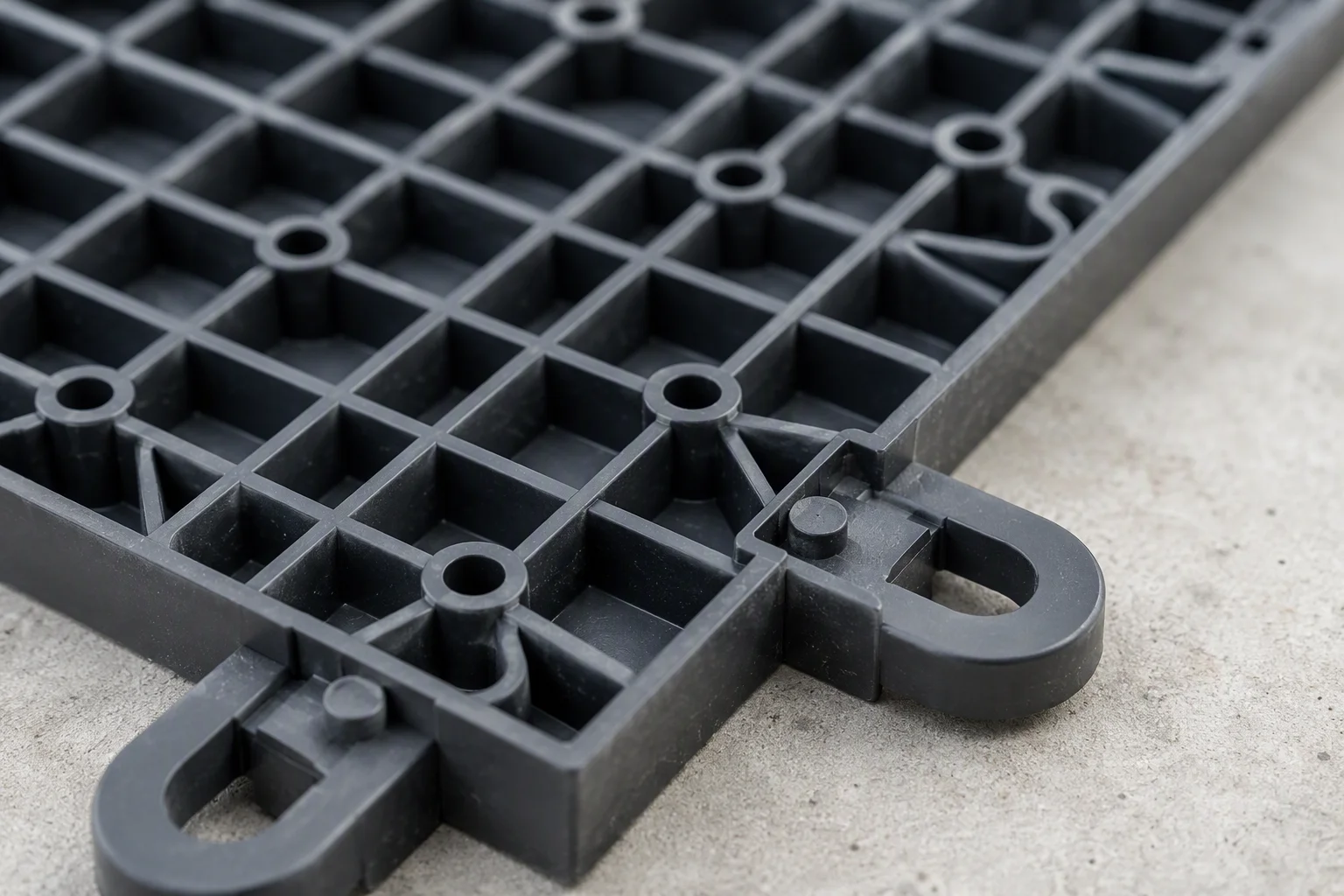
- Connector design. A loop-and-tab system with a reinforced rib grid on the back resists point loads far better than a thin, unreinforced panel.
- Spare availability. Being able to buy the same panel in three years matters more than any single spec number.
Which Material for Which Job
- A full garage floor that takes a car: polypropylene, in the thickest grade the budget allows.
- A workshop or standing bench area: PVC, or PP with an anti-fatigue mat where you actually stand.
- A wash bay or detailing zone: rubber or perforated tiles where water and grip matter most.
- A home gym corner: rubber for impact and sound, laid over the tile.
- A mixed-use garage: PP as the base floor with rubber in the specific zones that need it — the same zoned logic the current garage floor trends point toward.
Whichever you choose, check how it handles the spills a garage actually produces — our stain removal guide shows what each surface tolerates, and the value breakdown puts the cost difference in context.
The Bottom Line
Polypropylene is the right default for a garage that parks cars: stiff, stable, chemically resistant and strong enough under a stand. PVC buys you comfort at the cost of load resistance. Rubber buys you grip and sound dampening at the cost of weight, cleanliness and price. Match the material to the zone, and the floor will do its job for years.
Not sure which material suits your garage? Tell us what the space is used for and how heavy the loads get: browse garage floor tiles.


