


2027 Garage Flooring Trends: What's Coming Next
2027 Garage Flooring Trends: What's Coming Next
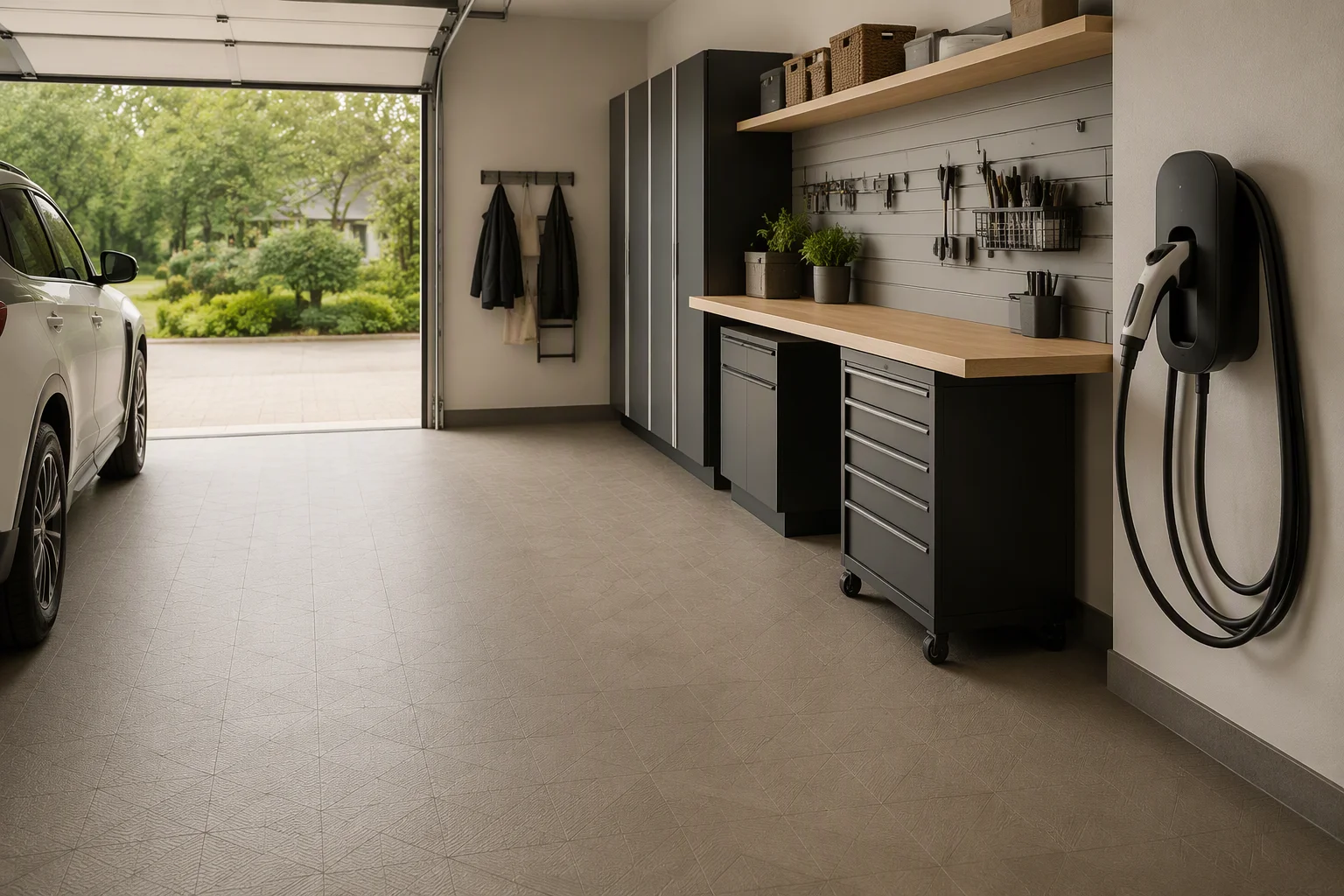
Garage floors used to be an afterthought — something you noticed only when it cracked. That has changed. As garages absorb charging stations, home gyms, workbenches, bike storage and the family's winter boots, the floor underneath has become the surface that decides whether the space works.
The shifts heading into 2027 all point the same direction: floors that are modular, easy to change, and chosen for how the garage is actually used rather than how it looks empty.
Why Garage Floors Are Getting More Attention
Three pressures are converging:
- The garage is doing more jobs. Charging, training, repairing, storing and laundering all happen on the same slab.
- Permanent coatings are hard to undo. A full epoxy or polyaspartic system is a commitment; if the space's use changes, the floor does not adapt with it.
- Repair matters more than longevity claims. Owners increasingly want a floor where one damaged square metre is a ten-minute fix rather than a resurfacing project.
That combination favours systems you can lift, rearrange and extend.
Where the Floor Itself Is Heading
Trend 1: Modular Floors Becoming the Default
The biggest change is not aesthetic. It is that a snap-together floor is no longer seen as the budget alternative — it is increasingly the practical first choice, because it installs over whatever slab is already there, comes up again without demolition, and can be extended when the garage gains a new zone. Anyone who has priced a coating removal understands the appeal.
Trend 2: EV-Ready Surfaces
As charging points become standard rather than optional, floors are being specified around the charging bay: surfaces that resist the heat of a charging cable resting on them, resist occasional coolant or battery spills, and stay visually clean in the zone where the car sits for hours. Cable management along the floor is also shaping layouts, with the charging bay treated as its own defined area rather than an afterthought. We covered the practical layout in our guide to garage floor tiles for EV charging zones.
Trend 3: Earthy, Low-Sheen Palettes
Glossy showroom grey is giving way to warmer, quieter tones — greige, sand, charcoal and muted graphite — with a matte rather than reflective finish. The reasoning is practical as much as visual: a low-sheen surface hides tyre dust and dried salt far better than a mirror finish, and it photographs better under the mixed lighting most garages have. Colour selection is now one of the most-asked questions at the point of purchase, which is why we wrote a full guide to choosing garage floor tile colours.
How the Space Is Being Used
Trend 4: The Garage as Living Space
More garages now include a zone that is not about cars at all: a bench, a small gym corner, a workshop wall, an entry area for boots and coats. Once a garage stops being purely utilitarian, the floor has to do two things at once — take a tyre load and look presentable enough to spend time on. Modular tiles handle that split well, and the same logic drives the mudroom-style setups in our garage entry zone guide.
Trend 5: Dedicated Wash and Detailing Zones
Home car care has grown into a hobby with equipment, and that is changing floor specification. Instead of one uniform surface, floors are being divided into purpose zones:
| Zone | What the floor needs |
|---|---|
| Wash bay | Chemical resistance, slip resistance, fast drainage |
| Detailing area | Flat, cushioned surface that will not mark on kneel-down work |
| Storage wall | Tidy visual line, easy to sweep under shelving |
| Entry / transition | Grit and salt containment near the door |
| Charging bay | Heat and spill tolerance in one defined footprint |
Our guide to garage floors for home car washing and detailing covers the wash-zone requirements in detail.
Trend 6: Mixed-Material Floors
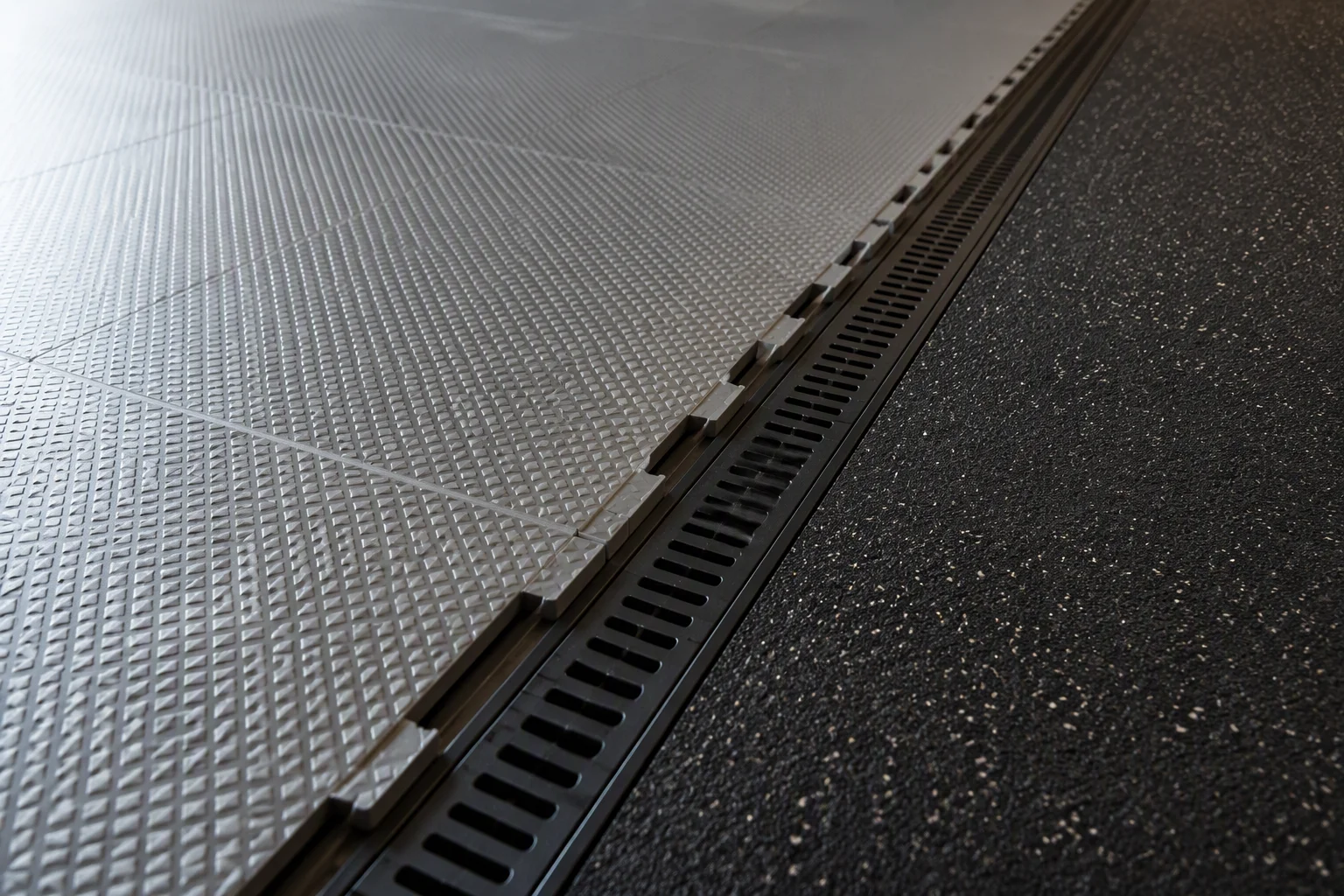
Rather than one surface wall to wall, more installations combine materials by function: hard modular tiles where vehicles and water are, a rubber or carpet section where someone kneels or trains, and a drainage channel between them. The design intent is that each zone gets a surface suited to it, with the joints planned rather than accidental.
Trend 7: Recycled and Recyclable Materials
Material provenance is showing up in buying decisions more than it used to. Recycled-content tiles and take-back or recycling routes at end of life are increasingly part of the conversation, particularly where a floor is specified for a commercial unit or a property being marketed on its environmental credentials.
What This Means If You're Buying Now
- Buy for the busiest zone, not the average. If a wash bay or charging point is planned, spec that area first.
- Choose a larger tile for open areas. It installs faster and reads calmer; see our sizes and layout guide.
- Pick a matte tone you can live with. Mid-tones hide tyre dust and salt better than very dark or very light floors.
- Order spare panels. Ten minutes and a spare tile beats a visible patch for the next decade — our replacement guide shows how.
- Plan storage before you lay the floor. Cabinets, hooks and overhead racks are easier to position first, and the same thinking shapes our garage organization guide.
- Leave the perimeter without heavy fixing. Keeping the edges free is what makes future changes simple.
The Bottom Line
The direction of travel is clear: garage floors are becoming modular, zoned and reversible, chosen for how the space is used rather than for a single dramatic finish. That favours interlocking tiles — they install over the slab you already have, tolerate a floor that does several jobs, and let one damaged panel be swapped without touching the rest.
Planning a garage for next year? Tell us the zones you want and the floor area and we will suggest a layout: browse garage floor tiles.
