


Do Garage Floor Tiles Trap Moisture? Your FAQ
Do Garage Floor Tiles Trap Moisture? Your FAQ
It is the question that stops more garage floor purchases than cost or colour: if you cover the slab with tiles, does the concrete underneath stay wet? And if it does, does that mean mould, a rotten slab, or a floor that smells?
The honest answer is that a tiled floor changes how moisture behaves rather than creating it — and in most garages it changes it for the better. Here is what actually happens.
The Short Answer
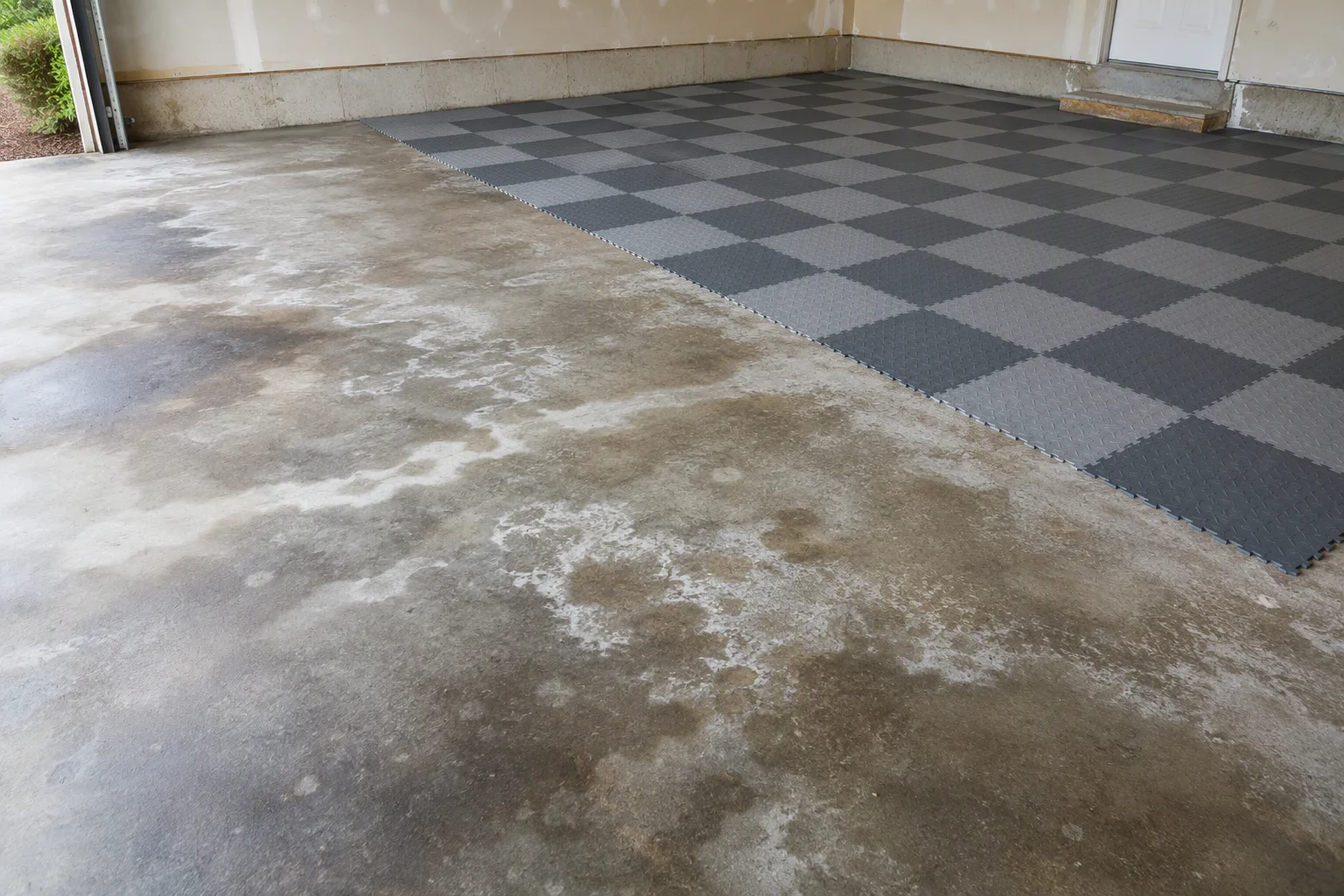
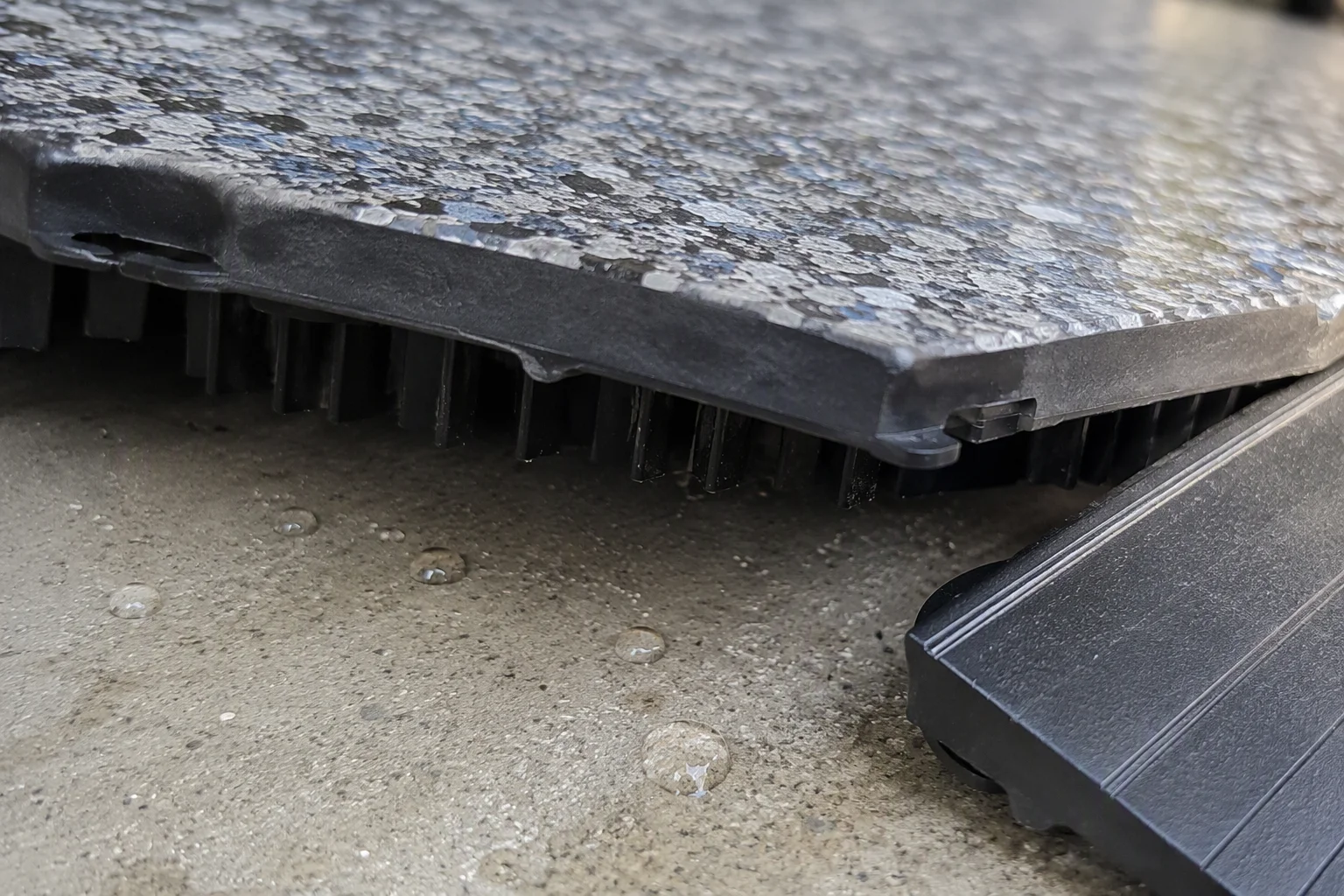
Interlocking tiles are not sealed down, so they do not trap moisture in the way a glued-down or painted surface can. The floor sits on its own ribbed base with an air gap beneath, and water that gets under it can move laterally and evaporate at the perimeter.
What tiles do not do is fix a slab that is actively taking on water. If the concrete is damp because of a drainage problem, a high water table or a failed damp course, that is a building issue that a floor covering cannot solve — and it should be diagnosed before you lay anything.
How Moisture Actually Moves Under a Tiled Floor
Through the Slab
Concrete is porous. Where a slab sits on damp ground, or where surface water collects against the outside of the garage, vapour can migrate slowly upward. This is a slow, diffuse process rather than a flow, and it is the reason a vapour barrier matters at the build stage.
Through the Seams
Water that lands on the floor — rain off the car, snow melt, washdown — runs through the tile seams and reaches the slab. This is intentional: it is what stops a film of water sitting on the surface. The water then travels along the gaps under the tiles toward the perimeter and evaporates.
From Above
Cold engines and temperature swings produce condensation in any garage. On a bare slab it forms a film on the surface; on a tiled floor it forms on the tile face and drains away, which is why a tiled floor is often dry to walk on sooner than concrete is.
The Slab Questions Everyone Asks
Do I Need a Vapour Barrier?
If you have the opportunity, yes — a vapour barrier under the slab is the correct way to keep ground moisture where it belongs. In an existing garage the slab is already poured, so the practical question changes: you need to know whether the slab is damp, not whether it should have been built differently.
The standard check is simple and worth doing before you order. Tape a square of plastic sheet to the slab, seal the edges, leave it for a day or two, and look for condensation underneath. It will not give you a number, but it will tell you whether the slab is actively releasing moisture.
Can Tiles Be Laid on a Damp Slab?
A slightly damp slab that dries out seasonally is usually fine — the air gap under the tiles allows it to keep drying rather than sealing the moisture in. A slab that is persistently wet is not a flooring question, and covering it will only hide the symptom. Deal with the source first.
Will Mould Grow Underneath?
Mould needs sustained moisture, organic material and still air. A plastic tile floor provides none of the three: it is inert, it is raised off the slab, and water that reaches the seams can drain and evaporate. The risk rises where water cannot escape — a floor laid tight to the walls with nowhere for the perimeter gap to breathe, or an area where a leak keeps the slab permanently saturated.
Keeping the perimeter gap clear is the single most effective precaution, and it is covered in our guide to installing around obstacles.
What About Efflorescence?
Those white, chalky, salty-looking patches on a concrete garage floor are mineral salts carried to the surface by moisture evaporating out of the slab. They are cosmetic and harmless, and they are a symptom of moisture movement rather than a problem in themselves. Brush them off before laying, and remember they may reappear on any exposed slab — which is part of why covering the floor is attractive in the first place.
Do Solid and Perforated Tiles Behave Differently?
Yes, and it matters in wet zones. A perforated tile lets water pass straight through to the slab and is the right choice for a wash bay or a heavily used entry area. A solid tile relies on the seams to drain. Neither traps water, but the perforated version drains faster where water arrives in volume — see our garage entry guide for how that plays out in practice.
Signs You Have a Moisture Problem Worth Investigating
- Persistent damp patches that never dry, even in warm weather with the door open.
- A musty or earthy smell in the garage that does not go away after airing it out.
- White salt deposits returning repeatedly on an exposed part of the slab.
- Water pooling against an internal wall or along the base of the wall itself.
- Peeling or blistering paint on the garage walls or skirting.
- Timber at floor level that feels soft — this one is worth checking immediately.
If two or more of these apply, have the garage assessed as a damp problem before choosing a floor. Any covering, tiles included, is the wrong first move.
What to Do If You Already Have One
- Identify where the water is coming from: surface run-off, groundwater, a leaking roof or gutter, or plumbing. Fix that first.
- Improve external drainage — check that the ground outside the garage door falls away rather than toward it.
- Lift a section of tiles and look. Tiles lift easily, which makes diagnosis possible in a way a glued coating never is. See our replacement guide for how to take up a section without disturbing the rest.
- Clean the exposed slab and let it dry thoroughly with the door open before relaying.
- Keep the perimeter gap clear so the under-floor space can breathe.
- If the slab stays wet regardless, get a damp specialist involved before spending money on any floor.
Quick Answers to Common Moisture Questions
| Question | Practical answer |
|---|---|
| Will tiles trap water on the slab? | No — the raised base and open seams let water drain and evaporate |
| Do I need to seal the slab first? | Not required; a dry, clean slab is what matters. See our slab condition FAQ |
| Can I lay tiles over a damp-proof membrane? | Membranes belong under the slab; tiles go on top of whatever surface is already there |
| Will the floor smell? | Not from the tiles — any smell indicates a moisture source that needs fixing |
| Does salt from winter roads cause problems? | It sits on the surface and rinses off; see our winter care guide |
| How do I clean a floor that gets wet constantly? | Work in sections and rinse properly — our pressure washing guide covers safe settings |
The Bottom Line
A tiled floor does not trap moisture; it manages it by letting water drain through the seams and dry from underneath. What it cannot do is solve a slab that is being fed water from outside. Test the slab before you order, fix any real damp source first, and keep the perimeter gap clear — do those three things and the question of trapped moisture stops being a concern.
Worried about your slab before ordering? Tell us what you are seeing and we will help you work out whether it needs attention first: browse garage floor tiles.
