


Garage Floor Tiles vs Ceramic Tile: Which Is Better?
Garage Floor Tiles vs Ceramic Tile: Which Is Better?
Ceramic tile looks fantastic in a garage showroom photo. It's also the flooring material most likely to crack the first time you drop a brake rotor on it. If you're weighing garage floor tiles against ceramic or porcelain tile, the decision comes down to one question: is this floor going to take impacts and loads, or only look good?
Here's the honest comparison, including the cases where ceramic genuinely wins.
Quick Comparison
| Factor | Interlocking Garage Floor Tiles | Ceramic / Porcelain Tile |
|---|---|---|
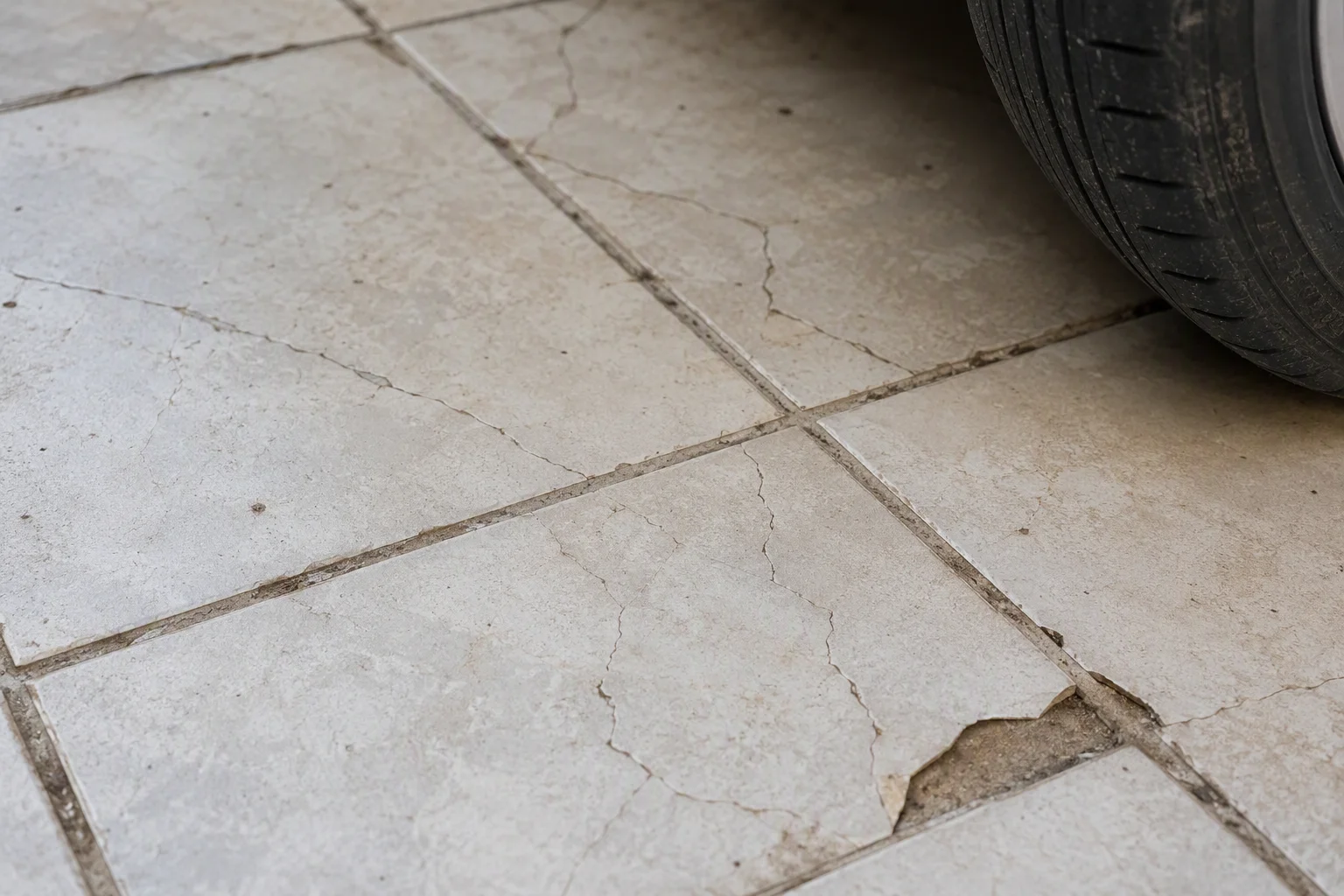
| Crack resistance | Flexes and absorbs impact | Brittle — chips and cracks |
| Broken piece repair | Swap one tile in minutes | Chip out, re-grout, match batch |
| Cold weather | Unaffected by freeze-thaw | Mortar and grout crack |
| Wet grip | Textured surface, good grip | Slippery when wet, even with additives |
| Weight | Light — no structural concern | Heavy — adds real dead load |
| Install time | A weekend, no adhesive | Days, plus curing time |
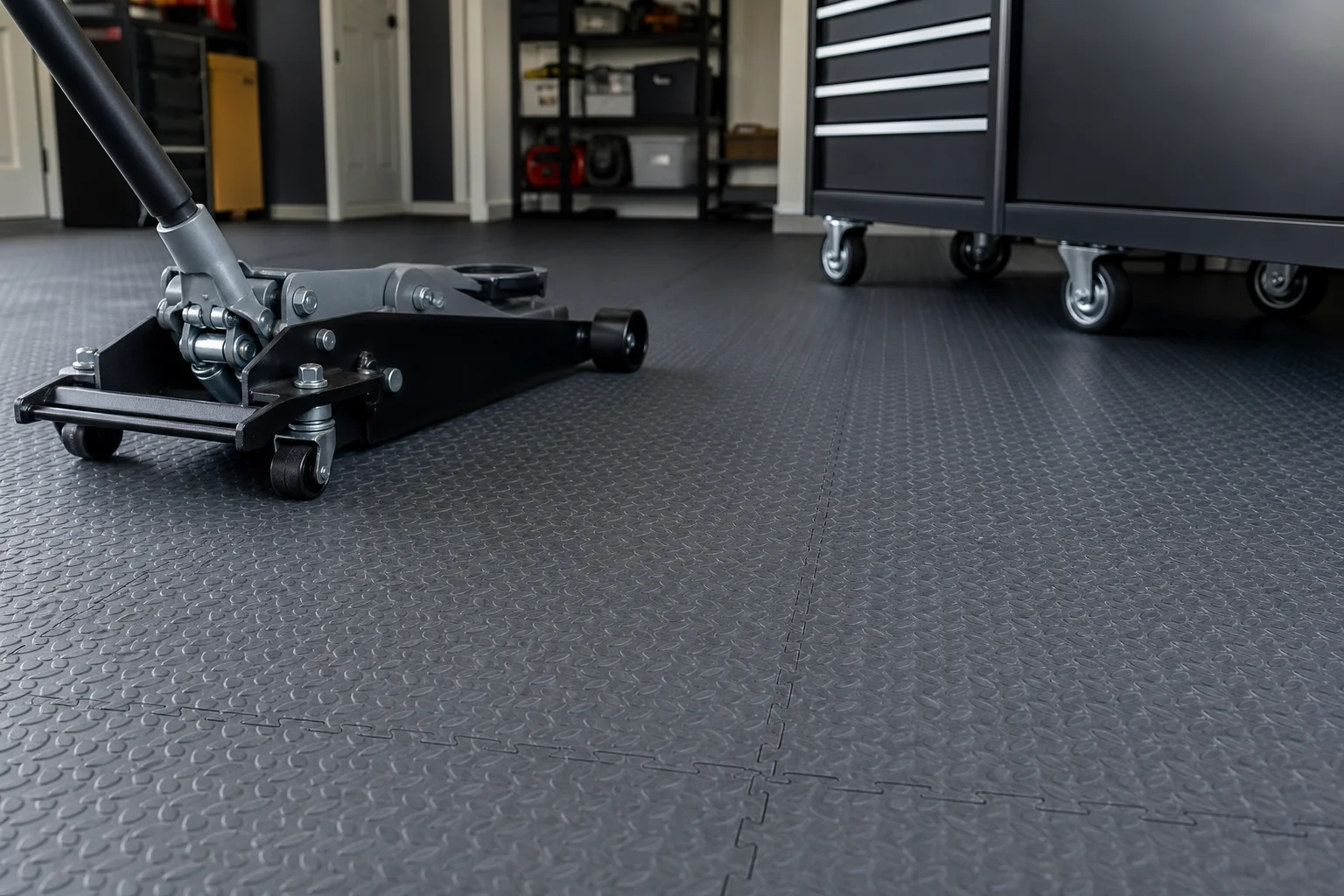
| Point loading | Spreads loads across the field | Concentrates load — punches through |
| Removable | Yes — take it with you | No — demolition to remove |
Why Ceramic Tile Struggles in Garages
Ceramic and porcelain are excellent floors for kitchens, bathrooms and showrooms. A garage asks three things they're bad at:
- Point loads. A jack stand or a dropped tool concentrates force on one small area. Rigid tile has no way to spread it, so it cracks at the impact point.
- Freeze-thaw. In cold climates, water sits in grout lines, freezes, expands, and lifts tiles. A garage floor gets wet and cold far more often than a hallway.
- Thermal shock. Hot tires on a cold tile, or a hot dropped part on a cold floor, produces exactly the differential that cracks glaze and body.
You can reduce these risks with a heavier porcelain and an epoxy grout, which is what a thicker, tougher floor material is meant to solve in the first place — but you'll pay a premium and still live with a non-repairable surface.
Crack Resistance and Load
This is the clearest difference. Interlocking tiles are a system: each tile transfers load to its neighbors through the connector tabs, so the whole field shares the weight. Ceramic tiles are individual units on a mortar bed — a load on one tile is carried by that tile.
- Vehicle weight: a 5,000 lb SUV spreads across four contact patches; both materials usually cope here
- Jack stands and lifts: the real test — steel point loads that rigid tile fails and flexible tile absorbs
- Dropped objects: sockets, hammers and rotors crack ceramic; they dent at worst on polypropylene
Freeze-Thaw and Climate
If your garage is unheated and your winters hit freezing, ceramic tile in a garage is a maintenance project, not a finished floor. Tiles lift at the edges within a few seasons because grout is porous and the mortar bond fails when water expands.
Interlocking garage floor tiles sit on the concrete as a floating surface with drainage gaps underneath. Water passes through, air moves, ice has somewhere to go, and nothing de-bonds. That's the main reason this material dominates in Canada, the northern US and Northern Europe.
Grip and Safety
A garage floor gets wet with rain, snowmelt and wash water — often while you're carrying something heavy. Textured polypropylene tiles provide reliable grip wet or dry.
Glazed ceramic is one of the slickest floor surfaces available when wet. You can specify slip-resistant tile, but the texture wears, and the same surface that stops a slip also traps dirt in a way that's much harder to clean than a removable tile.
Weight and Structural Load
Ceramic tile plus mortar plus grout adds roughly 4-6 lb per square foot to your slab. On a 400 sq ft garage, that's nearly a tonne of dead load that has to be carried permanently, and it complicates any future plan to add a lift or mezzanine.
Interlocking floor tiles weigh a fraction of that and spread their weight across the whole floor. If you're already planning heavy equipment, that margin matters.
Install Time and Skill
| Step | Interlocking Tiles | Ceramic Tile |
|---|---|---|
| Surface prep | Sweep, check for high spots | Grind, level, prime |
| Setting method | Click together by hand | Thin-set mortar, notched trowel |
| Curing | None | 24-72 hours before loading |
| Cutting | Utility knife or jigsaw | Wet saw |
| Grouting | None | Full grout job, then sealing |
| DIY difficulty | Weekend, no experience needed | Pro-level or long learning curve |
If you want patterned layouts, tiles also give you options ceramic can't easily match — see our checkerboard and border pattern guide for what's possible without a wet saw.
Cost Comparison
- Material: ceramic is often cheaper per square foot at the low end, comparable or higher once you pick porcelain rated for outdoor use
- Installation: interlocking tiles are DIY; ceramic typically needs a professional, which often doubles the project cost
- Repair: a cracked ceramic tile means matching an old batch, chipping out mortar and re-grouting — or an ugly patch. Interlocking tile repair is a one-tile swap, as covered in our replacement guide
- Removal: ceramic has no resale value and costs money to demolish; interlocking tiles can be lifted and reinstalled in a new garage
When Ceramic Tile Makes Sense
To be fair, ceramic is the right answer in a few garage scenarios:
- Showroom or display garage where cars are detailed and nothing heavy is dropped
- Climate-controlled space with no freeze-thaw exposure
- You want a tiled wall/floor aesthetic and are prepared to keep spare tiles for repairs
- Concrete-grinding and levelling is already in the budget — ceramic needs a flatter, more stable base than interlocking tiles do
If none of those describe your garage, the practical choice is a floor that flexes instead of cracking. That's the same logic that makes tiles beat other rigid and semi-rigid options in a working garage.
FAQ
Can I use outdoor-rated porcelain tile in a garage?
You can, and it performs better than standard ceramic. But you're still installing a rigid, grouted, non-repairable surface in a space designed for impacts — and paying a premium for the privilege.
Does interlocking tile feel cheap underfoot?
Quality tiles at 30 mm or more feel solid and quiet, because the ribbed base transfers load into the slab. Thin budget tiles are the ones that sound hollow.
Which is easier to keep clean?
Interlocking tiles, by a wide margin. Grout lines are the hardest part of any tile floor to clean in a garage, and interlocking tiles have none — you can also lift individual tiles for a full wash.
Will ceramic tile hold up under a car jack?
Usually not. Jack stands and floor jacks concentrate hundreds of pounds on a few square inches. That's the failure mode that sends most garage owners from ceramic to interlocking tile in the first place.
The Bottom Line
Ceramic tile is a beautiful, durable floor for living spaces. In a garage, its two strengths — rigidity and a grouted, permanent surface — become liabilities. Interlocking garage floor tiles flex under load, ignore freeze-thaw, grip when wet, install in a weekend and can be repaired one tile at a time.
If your garage has to work rather than simply look good, browse our interlocking garage floor tiles and match the thickness to your loads before you buy.


