


Garage Floor Tiles: 15 Questions to Ask Before You Buy
Garage Floor Tiles: 15 Questions to Ask Before You Buy
Buying garage floor tiles is a 10-minute decision with a 20-year consequence. Ask the right questions up front and you'll get a floor that looks great and lasts decades. Skip them and you could end up with tiles that crack under your car, fade in the sun, or cost more than they should.
Here are the 15 questions every smart buyer asks — and the honest answers from a factory that makes them.
Cost & Value
1. How much do garage floor tiles cost per square foot?
Expect roughly $1.50-$3.50 per square foot for quality PP tiles, depending on thickness. Factory-direct sellers like Arlott undercut retail by buying straight from production — no middleman markup. Compare per-square-foot, not per-tile, since sizes vary.
2. What does the warranty actually cover?
Ask specifically: material defects, color fading, cracking under normal use? A serious manufacturer offers a 10-20 year warranty against manufacturing defects. Beware warranties with vague language — ask what's excluded.
3. How is shipping priced?
Tiles are bulky, so freight can be 20-30% of your total. Ask whether shipping is included, whether there are pallet thresholds (free freight over X square feet), and whether the quote covers delivery to your door or just the nearest port/terminal.
Product Quality
4. What material are the tiles made from?
High-grade polypropylene (PP) copolymer is the industry benchmark — UV-stabilized so colors don't fade, chemically resistant so oil and solvents won't damage it. Avoid cheap recycled plastics that become brittle in cold weather. Ask for the exact resin grade.
5. What thickness do I actually need?
18-20mm suits light storage; 30mm is the sweet spot for parking and workshops; 40-50mm handles heavy machinery and constant commercial traffic. Buy the thickness your heaviest load demands — that's the single biggest quality variable.
6. How many colors and patterns are available?
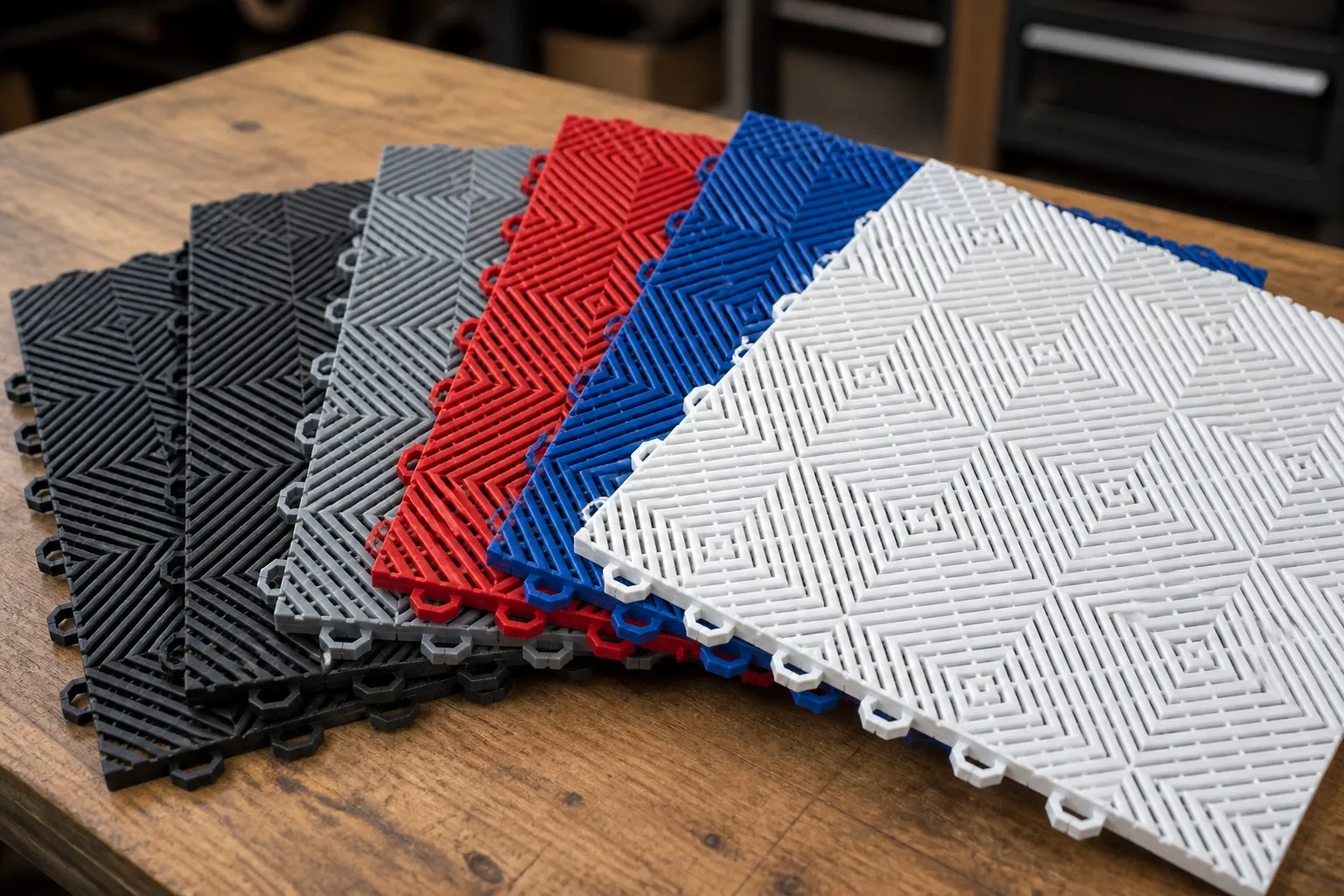
More color options mean more design freedom — checkerboards, racing stripes, two-tone borders. Arlott offers 14 standard colors. Also ask whether custom colors or logos are possible for commercial installations.
7. What's the load rating?
Legitimate manufacturers publish load test data. For reference, quality 30mm tiles typically support 60,000+ lbs per square meter static load. If a seller can't give you a number, treat that as a red flag.
Buying Process
8. Can I order samples first?
Always. A real tile in your hand tells you more than any photo — feel the texture, test the interlock, check the color against your walls. Factory-direct sellers usually offer samples at cost or free with your order.
9. How many tiles do I need?
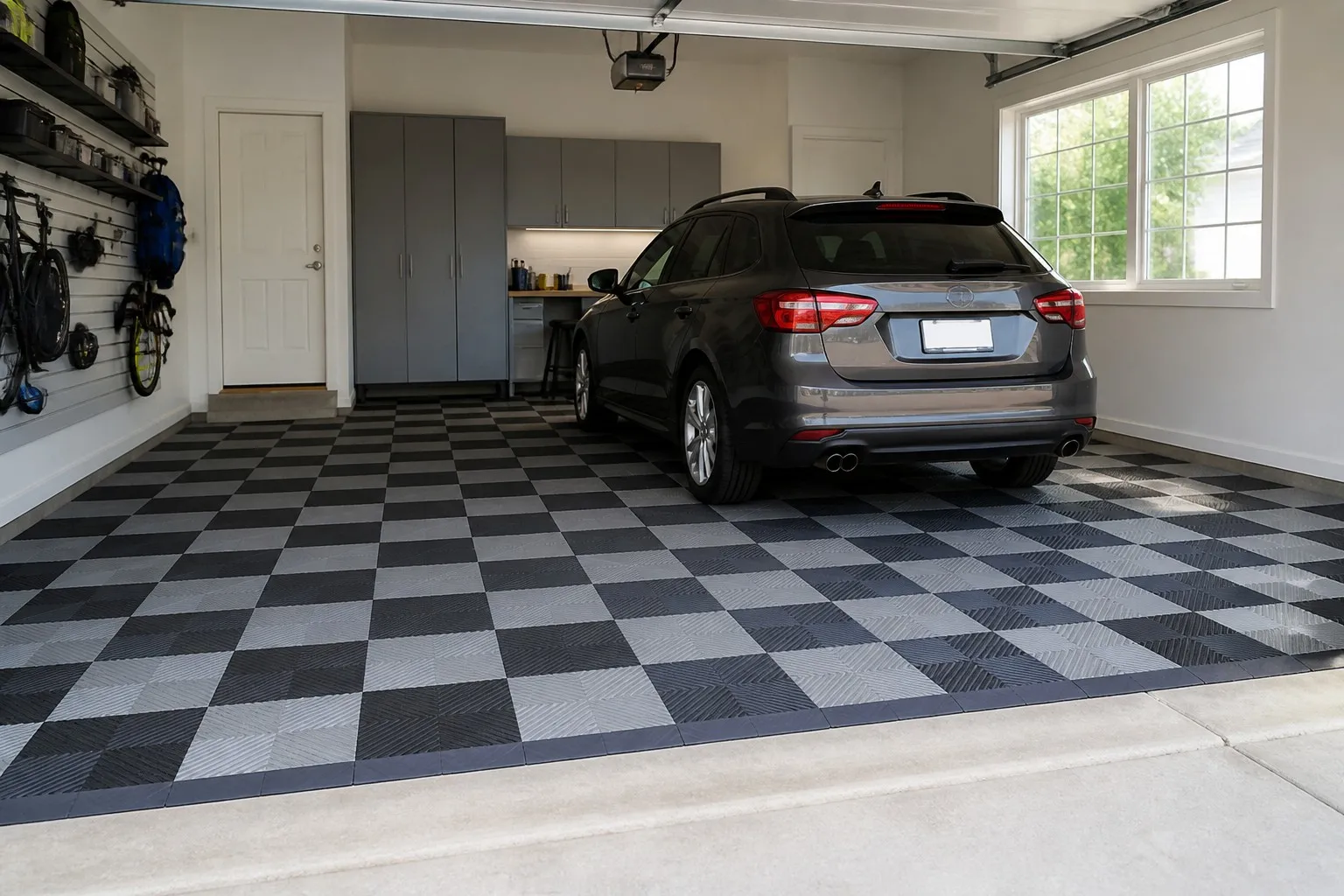
Measure your floor (length × width), divide by the tile area, add 10% for cuts and 2-3 spares. A double car garage at ~28m² needs roughly 195 tiles. See our full calculator guide for exact math.
10. How fast will my order ship?
Ask for the real lead time: stock colors usually ship within days; custom or large commercial orders can take weeks. Get the shipping date in writing before you pay.
11. What's the return policy?
Clarify what happens if the wrong quantity arrives or tiles are damaged in transit. A reputable factory replaces damaged pieces — that's exactly why you keep 2-3 spares. Know the claim window (usually 7-14 days) before opening every box.
Installation & Maintenance
12. How hard is installation?
Interlocking tiles click together like giant puzzle pieces — no adhesive, no tools beyond a rubber mallet for stubborn joints, no drying time. Most homeowners install a single-car garage in one afternoon. Follow our weekend install guide.
13. Can I install them over my existing floor?
Over clean, dry concrete — yes, immediately. Over existing epoxy — yes, if the epoxy is well-bonded and not peeling (see our epoxy overlay guide). Over cracked or uneven slabs, level the major low spots first.
14. How do I keep them clean?
Sweep or blow debris, mop with pH-neutral cleaner, and wipe oil spills quickly. Tiles are non-porous, so stains stay on the surface. For tough marks — tire scuffs, rust, paint — we've got a stain removal guide.
15. How long will they really last?
Quality PP tiles with UV-stabilized resin last 15-20+ years in a residential garage. And because individual tiles are replaceable, a damaged one is a 2-minute swap — not a floor replacement. That's the durability advantage over epoxy, which typically needs recoating every 3-5 years.
The Bottom Line
Fifteen questions, one takeaway: buy from a manufacturer who answers them all with numbers, not vague claims. Thickness, resin grade, load rating, warranty, and shipping terms are the five that separate a great floor from a regret.
Ready to compare? Browse Arlott's garage floor tiles — 14 colors, 5 thicknesses, published load ratings, and a 20-year warranty. Order samples first; contact our team with any question and we'll answer it the same way.
